
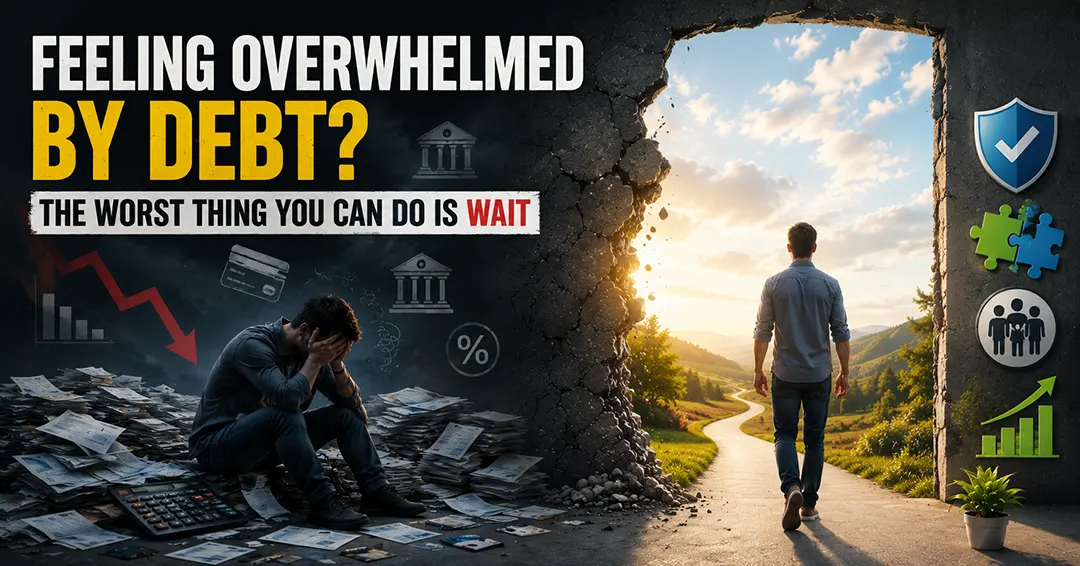
Debt doesn’t just sit in your bank statements. It follows you to bed. It surfaces when an unknown number calls, or when you’re at the grocery store doing quiet math in your head.
That experience is more common than most people admit out loud. Credit card balances that compound faster than you can pay them down, personal loans that made sense at the time, auto payments that felt fine until your circumstances shifted. These aren’t signs of failure. They’re signs that life changed, and your obligations haven’t adjusted to match.
The question isn’t how you got here. It’s what you do next.
What Debt Stress Actually Costs You?
The numbers on a statement don’t capture what financial pressure really takes from you. Sleep. Concentration. The low-grade dread that surfaces at random moments a work meeting, a family dinner, the middle of the night.
Certain Patterns Show Up Again And Again:
- Paying the minimum on a card and knowing, somewhere in the back of your mind, that it’s barely making a dent
- Using one form of credit to keep another from going under
- Letting calls from numbers you don’t recognize pile up in voicemail
- Watching your savings drain without any single obvious cause just month after month, less than before
- Running the numbers, then running them again, and landing in the same place
None of that is a character flaw. That’s what financial pressure looks like when the gap between income and obligations stops closing on its own.
The Part Most People Don’t Find Out Until It’s Too Late
Here’s something that doesn’t get said enough: the longer you wait, the fewer choices you have.
Not just because debt compounds, though it does. Because options that exist at month three are sometimes gone by month nine. Accounts move to collections. Credit takes hits. Situations that were negotiable quietly stop being negotiable.
Coming to the table early keeps more doors open. That’s not pressure. It’s just how this works.
What “Credit Restructuring” Actually Means
People hear that phrase and sometimes picture something intense. Lawyers involved. Major decisions. Something drastic.
Usually it’s none of that.
What it actually looks like: someone goes through your current obligations with you, what you owe, what you’re paying monthly, what your income realistically supports right now and figures out whether there’s a more workable structure. Not based on what made sense when you originally took on the debt. Based on what your financial life looks like today.
For some people, that ends up meaning one consolidated payment instead of five separate ones pulling in different directions. For others, it’s simply getting monthly amounts to a number that doesn’t put the rest of the month underwater. Sometimes it’s just getting a clear, honest picture of the situation for the first time which, honestly, is more valuable than it sounds.
What the right approach looks like? It’s different for everyone. A situation heavy in credit card debt is a different problem than an auto loan issue, which is again different from a mix of personal loans. There’s no formula that applies across the board, which is exactly why a case-by-case review matters more than generic guidance.
How You Actually Start Moving Forward
Financial recovery isn’t a single event. It tends to be a series of smaller moves getting the numbers down on paper, making one obligation more manageable, then the next. A budget built around what you actually bring in, not what you used to.
The thing that makes the real difference, more often than anything else, is having someone walk through it with you who’s actually seen situations like yours before. Not a form letter. Not a generic checklist you could have found yourself. A real back-and-forth about what’s going on and what options genuinely exist for you.
How Homeland Solves It Works
We work with people in debt stress, people who’ve missed payments, and people who aren’t sure yet what’s going to happen and want to figure it out before it gets worse.
Our job isn’t to assess how you got here. It’s to have an honest conversation about where you can go from here, and which options actually fit your situation.
The first step is a confidential conversation. No commitment required. You talk, we listen, and we tell you honestly what we think your options look like.
Frequently Asked Questions
1. What is credit restructuring, in plain terms?
A review of your existing debt, followed by an effort to reorganize how it’s being handled so it better fits your current financial reality. Less formal than it sounds. More useful than most people expect.
2. Does it actually help with the stress?
For most people we work with, yes and often more than they anticipated. A lot of the pressure comes from juggling multiple payments, due dates, and interest rates at once. Simplifying that structure has a real effect on daily life. That said, outcomes vary, and we’ll be upfront about what’s realistic in your specific case.
3. When should I reach out?
Before you think you need to, honestly. Once you’re in collections or dealing with serious credit damage, the range of options narrows. If you’re stretched but haven’t missed anything yet that’s actually the best time to have a conversation. Earlier almost always means more room to work with.
4. Will this hurt my credit score?
Depends entirely on what path fits your situation. Some approaches have minimal credit impact. Others don’t. We walk through that with you before any decisions are made. No surprises.
5. What if I’ve already missed payments?
That’s where most people are when they first contact us. Missed payments aren’t a barrier to exploring what’s possible.
6. What kinds of debt do you look at?
Credit cards, personal loans, auto loans, and other financial obligations. Different debt types come with different options which is part of why advice that’s specific to your situation matters more than anything general.
7. How long does it take?
Honestly, it depends on what’s involved. Some situations move quickly; others take longer. Once we understand your case, we’ll give you a real timeline not a vague range that tells you nothing.
8. Is what I share kept private?
Yes. Everything stays between us. That’s not negotiable.
9. Can things genuinely get better?
Yes. We’ve seen people come through situations that looked pretty bleak at the start. It takes a real plan, honest expectations about what it involves, and follow-through. None of that happens automatically. But it’s doable and we’ve watched it happen.
10. How do I start?
Reach out. The first conversation is confidential and doesn’t commit you to anything. Tell us what’s happening, and we’ll tell you honestly what we see.